Remember those old, janky localizations we sometimes stumbled upon as kids? The ones where the dialogue felt like it was fed through a woodchipper and then reassembled by a very literal robot? We loved them anyway, but those charmingly bizarre moments pulled us right out of the experience. Today’s gamers in Latin America are just as passionate, but they deserve—and expect—so much more. They want to feel like the game was made for them, not like they’re deciphering a relic from a lost civilization.
The good news? There’s a way to ensure this process is smooth, efficient, and gets you the high-quality results your game deserves. The secret isn’t just hiring great translators; it’s giving them the right tools from the very beginning.
That tool is called a Localization Kit (or «Loc Kit» for short).
Think of it as a care package for your localization team. It’s everything we need to truly understand your game’s universe and become your partners in creativity, not just vendors. A well-prepared Loc Kit is the difference between a generic translation and an authentic, engaging experience that feels like it was made for Latin American players from the ground up.
In this post, we’ll break down exactly what goes into a localization kit. Consider this your checklist for success.
What Exactly is a Localization Kit?
Simply put, a localization kit is a package of files and information you provide to your localization team before the first word is ever translated. It’s the foundation for the entire project.
Without it, translators are working in the dark. We’re making educated guesses about context, tone, and character. With it, we have a clear roadmap. We understand your vision, which allows us to make smart, creative decisions that honor your original intent while making it feel native to Spanish-speaking gamers.
A great Loc Kit does two main things:
- Saves You Time and Money: It prevents misunderstandings and costly rework later. Clear context means fewer questions and faster, more accurate translations from the start.
- Guarantees Quality: It empowers your translators to do their best work, resulting in a final product that builds a loyal fanbase in a new region.
Now, let’s open up this toolkit and look at each component.
The Anatomy of a Perfect Localization Kit: Your Essential Checklist
A robust localization kit can be broken down into a few key sections. You don’t need to create everything from scratch; often, this is just about gathering documents you already have.
Section 1: The Game Bible & Context (The «Big Picture» Stuff)
This is the most important part. Here, you help us fall in love with your game the way you have.
- Game Overview/Pitch Document: What is your game about? Give us the elevator pitch. Is it a epic fantasy RPG, a quirky puzzle game, a gritty survival horror? This sets the stage for everything.
- Story Summary & Lore Bible: Especially important for narrative-driven games. We need to know the world’s history, the factions, the character backstories. Why does the villain hate the hero? What is the significance of that ancient relic? Understanding the lore helps us choose words that carry the right weight and history.
- Target Audience: Who are you making this game for? Is it for a hardcore strategy audience or a casual, family-friendly crowd? The Spanish we use will vary significantly based on the player’s age and gaming experience.
- Style Guide/Tone of Voice: This is crucial. How do your characters speak?
- Is the dialogue formal, slangy, sarcastic, or poetic?
- Are there specific characters with unique speech patterns? (e.g., an ancient wizard who uses archaic language, a young rebel who uses modern slang).
- Latin American Note: This is where you can specify if you have a preference for a «Neutral Spanish» or if you are targeting a specific country (like Mexico, Argentina, or Colombia). A good team will guide you on the best approach for maximum reach.
Section 2: The Technical Files (The «Nuts and Bolts»)
This is the actual content that needs to be translated, prepared in a way that makes our job efficient.
- The String File: This is the file that contains all the text from your game: dialogue, item names, menu buttons, etc. The most common format is a CSV or Excel spreadsheet, but it can also be JSON, XML, or other formats.
- Crucial Tip: Please provide context for each string! A cell that just says «Yes» is impossible to translate accurately. Is it «Yes, I agree!» or «Yes, you found the secret!»? The best practice is to include a «Context» or «Notes» column for every line of text.
- Glossary of Key Terms: This is a list of your game’s unique vocabulary. It’s a non-negotiable for consistency.
- What to include: Character names, place names, unique spells, tech, creature names, key items (e.g., «Mana Potion,» «Plasma Rifle,» «The Sword of Azura»).
- What to specify: For each term, tell us if it should not be translated (like a proper name), and provide a brief definition. This ensures that every translator on the team calls that powerful artifact «El Cristal Élfico» every single time, and never «La Gema Élfica.»
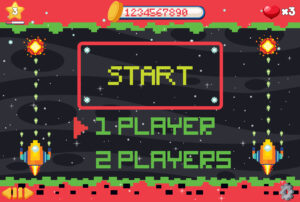
- List of UI Elements/Menus: A document with screenshots of your game’s user interface. Buttons like «Start,» «Options,» and «Save» are straightforward, but seeing the UI helps us understand character limits. We need to know how much space we have for a word so the text doesn’t get cut off on the screen.
Section 3: The Visual & Audio Assets (The «Show, Don’t Tell» Stuff)
Text in a spreadsheet can only tell us so much. Visuals and audio bring the game to life for us as translators.
- Game Build or Gameplay Videos: This is pure gold. If you can provide a test build of the game, even an early one, it’s incredibly helpful. Failing that, a full walkthrough video is the next best thing. Seeing the text in context—how it appears on screen, the mood of the scene, the character’s facial expressions—is invaluable.
- Art Assets: Concept art, character models, and environment screenshots. These help us grasp the aesthetic and feel of the game. Translating the description of a «dark forest» is different if it’s a whimsical fairy-tale forest versus a terrifying haunted one.
- Audio Files (Optional but great): If you have recorded English voice-over, sharing those files helps us match the tone and pacing of the dialogue. Hearing a character’s voice—whether it’s cheerful, menacing, or anxious—directs our word choice.
Section 4: The Project Specifics (The «Logistics»)
This is about making sure we meet your expectations on a practical level.
- Timeline: What are your key milestones? When do you need the first batch of translations? When is the final deadline?
- Contact Person: Who is the point of contact for questions? Is there a lead writer we can reach out to for clarification on story elements?
- Tools: Are you using a specific localization platform (like Lokalise, Crowdin, or Transifex)? Let us know so we can work within your preferred system.
Why a Loc Kit is Your Best Investment for the Latam Market
Latin America is not a monolith. While the Spanish language unites the region, the cultural nuances between countries are rich and varied. A word that is a harmless joke in one country might be a strange insult in another. The slang in Mexico City is different from the slang in Buenos Aires.
A professional localization team, armed with a detailed Loc Kit, does more than translate. We adapt. We become cultural consultants. We can spot a reference that won’t land and suggest a locally relevant equivalent. We can ensure the humor translates and the emotional moments hit just as hard.
This level of care is what transforms a player from someone who tries your game into someone who loves it. It shows respect for your new audience and builds the kind of goodwill that leads to positive reviews, word-of-mouth recommendations, and long-term success.
Ready to Build Your Kit? We Can Help.
We know that preparing all this might seem daunting. But remember, you’re not alone. Think of your localization team as an extension of your own development team.
If you’re looking at your files and thinking, «I have some of this, but not all,» that’s okay. The goal is to provide as much context as you can. Even a basic Loc Kit is infinitely better than none.
At Linguacy, we specialize in bringing games to life for Latin American audiences. Our team of native Spanish-speaking translators are also gamers and cultural experts. We don’t just work with text; we work with worlds.
If you’re planning your launch in Latin America, let’s talk. We can guide you in building your localization kit and provide you with a seamless, high-quality localization process that honors your creative vision.
Get in touch today for a free, no-obligation consultation and quote. Let’s work together to make your game a hit south of the border.